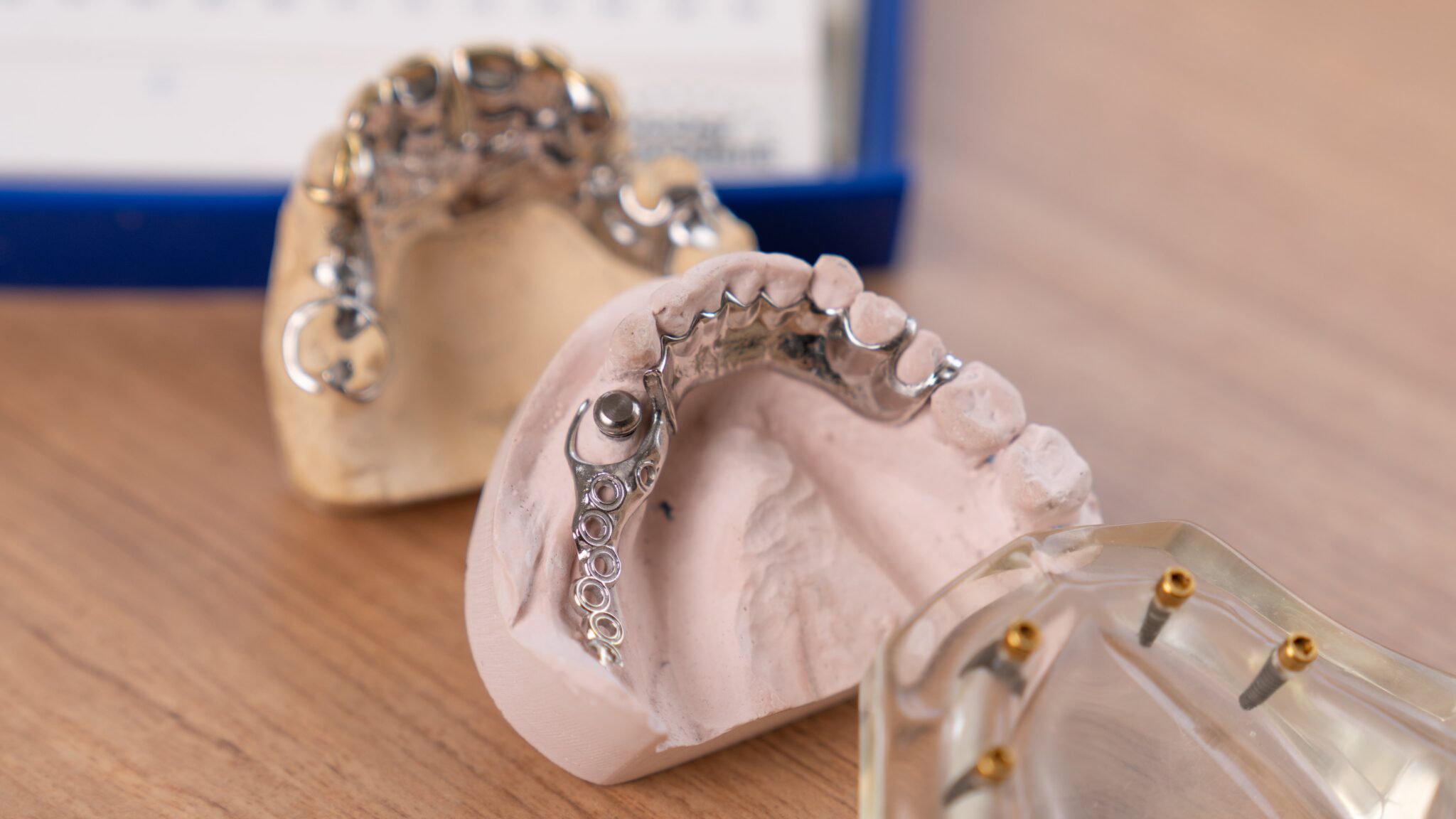
Implant-retained dentures can still need repairs or maintenance over time. The issue may involve the removable denture, its attachment components or, in some cases, the implant system itself, which is why identifying the source of the problem matters.
Can Implant-Retained Dentures Break?
Yes, the Denture Part Can Still Crack, Chip, Loosen or Wear Over Time
Yes. Like other removable dentures, the denture component can still be affected by everyday wear or accidental damage. EDR’s repair guidance identifies issues such as dropping a denture, chewing very hard foods and changes in fit as common contributors to denture damage.
The denture base may crack, artificial teeth can chip or break, and changes in the fit or attachment system may cause the denture to feel less secure. This means implant-retained denture repairs may still be required even when the implants themselves remain stable.
The Implants Are Fixed in the Jaw, but the Denture and Attachments May Need Maintenance
Dental implants are placed in the jaw and provide anchor points for the removable denture, which connects through an attachment system. EDR’s information on dental implants explains more about implant treatment and individual suitability.
Over time, the denture and its attachment components may need adjustment, maintenance or replacement. A loose or damaged denture does not automatically mean there is a problem with the implant itself, but it should be professionally assessed to identify which part needs attention.
What Parts May Need Repair or Replacement?
Denture Base, Artificial Teeth, Clips, Inserts or Attachment Components
An implant-retained denture includes several parts that can experience wear or damage over time. Depending on the design, this may include the denture base, artificial teeth and the clips, inserts or other attachment components that help connect the denture to the implants.
A crack in the denture base or a damaged artificial tooth may be repairable, while worn attachment components may require adjustment or replacement. The right approach depends on which part is affected and should be confirmed through an assessment.
Why Wear and Tear Can Affect How Securely the Denture “Clicks” Into Place
The attachment components help the removable denture engage with the implants and stay stable during everyday use. As these components wear, the denture may not connect as firmly as it once did and can begin to feel looser during eating or speaking.
This does not necessarily mean the implants themselves are damaged. In some cases, denture attachment replacement or another form of maintenance may help improve how securely the removable denture fits and functions.
Signs Your Implant-Retained Denture Needs Attention
Loose Fit, Clicking, Rocking, Rubbing or Sore Spots
Implant-retained dentures are designed to provide a stable, comfortable fit. If yours begins to feel loose, rocks during eating, clicks unexpectedly or starts rubbing against the gums, the fit or attachment system may need to be checked.
Signs that may need professional attention include:
- A denture that feels looser than usual
- Clicking or rocking when chewing or speaking
- Rubbing, pressure or sore spots
- Difficulty getting the denture to attach securely
- A noticeable change in how the bite feels
These symptoms can have different causes, so an assessment is important before deciding whether the denture needs adjustment, a reline, attachment maintenance or another type of repair.
Cracks, Broken Teeth, Reduced Bite Comfort or Trouble Attaching the Denture
Visible damage such as a crack in the denture base or a broken artificial tooth should also be checked promptly. EDR advises against continuing to wear a damaged denture if it is causing discomfort and warns patients not to attempt repairs with household glue.
A broken implant denture or one that suddenly becomes difficult to attach may involve the removable denture, its attachment components or another part of the implant system. If pain, swelling or movement of an implant is involved, further review by a dentist or implant provider may be required.
Can Implant-Retained Dentures Be Repaired the Same Day?
Simple Denture Cracks or Tooth Repairs May Be Quicker to Assess
Straightforward damage to the removable denture, such as a crack or damaged artificial tooth, may be simpler to assess than a problem involving the implant attachments. Whether it can be repaired the same day still depends on the damage and appointment availability.
EDR’s denture repair service begins by assessing the damage before the denture is cleaned, aligned where required, repaired, polished and checked for fit. Emergency repairs are given priority.
Repairs Involving Implant Attachments or Implant Parts May Need Extra Appointments
If the problem involves clips, inserts or other attachment components, the repair may require replacement parts or additional appointments. If the issue appears to extend beyond the removable denture and its attachments, review by a dentist or implant provider may also be needed.
Why Regular Maintenance Matters
Cleaning, Checks, Relines and Attachment Replacement Can Help Protect Comfort and Function
Regular maintenance can help manage changes in fit, wear and attachment performance over time. Depending on the condition of the denture and attachment system, this may involve professional checks, cleaning, adjustments, relines or replacement of worn attachment components.
EDR’s Denture Maintenance Program includes checking comfort and stability, bite and tooth wear, cracks, chips and loose teeth, as well as the condition of the oral tissues and any cleaning or polishing requirements. These checks can help identify changes before they become more noticeable problems.
Implant-Retained Dentures Still Need Professional Review, Even if They Feel Secure
A denture can feel stable while still developing gradual wear in the base, artificial teeth or attachment system. Regular professional reviews allow the fit, bite and condition of the denture and attachment components to be checked for changes or wear.
Implant denture maintenance also includes keeping the denture and implant areas clean and attending recommended dental reviews. If the fit changes over time, a reline, adjustment or attachment replacement may be considered after assessment.
What Should You Do if Your Implant Denture Feels Loose or Broken?
Stop Wearing It if It Causes Pain, Rubbing or Pressure
If your implant-retained denture is cracked, rubbing or putting uncomfortable pressure on the gums, avoid continuing to wear it until it can be assessed. Continuing to wear a damaged or poorly fitting denture may cause further rubbing or irritation to the surrounding tissues.
If you notice pain, swelling or movement around an implant, arrange a dental assessment rather than treating it as a routine denture repair.
Book a Denture Repair Assessment Before Trying Glue or DIY Repair Kits
Avoid household glue or attempting to repair the denture yourself. EDR advises patients to bring all broken pieces to their appointment so the damage can be professionally assessed.
A professional assessment can identify whether the problem involves the denture base, artificial teeth, fit or attachment system before the appropriate repair is recommended.
EDR Can Assess the Denture and Advise if an Implant Dentist Is Needed
Emergency Denture Repairs can assess a loose or damaged removable denture and determine what type of attention it may require. If the problem appears to involve an implant or abutment, or there is pain, swelling or movement around an implant, further review by a dentist or implant provider may be recommended.
Is your implant-retained denture loose, cracked, or uncomfortable? Contact Emergency Denture Repairs to book a denture repair assessment in Perth.